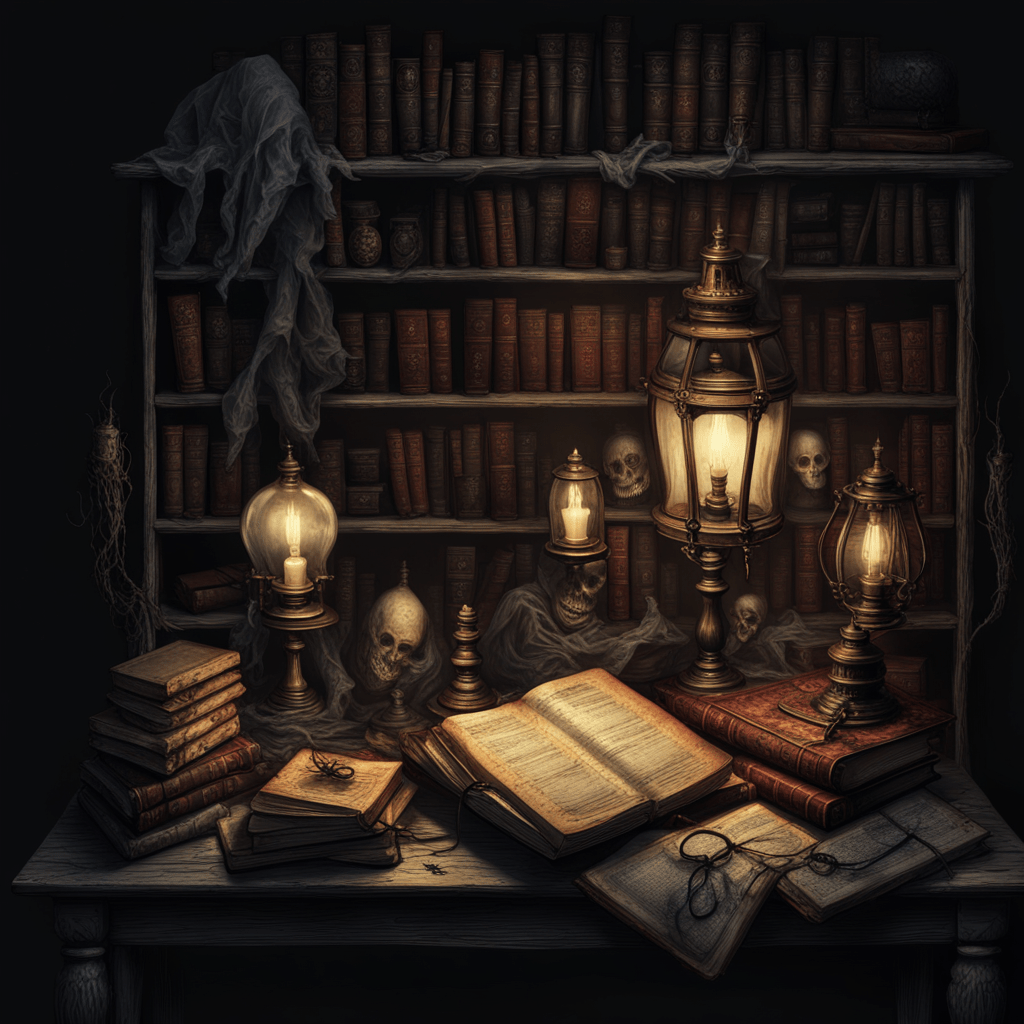
Horror novels, like their cinematic counterparts, have a rich and diverse history that spans centuries. From ancient folklore to modern psychological thrillers, the genre has evolved and adapted to reflect changing fears and cultural landscapes. Here’s a brief overview of the history of horror novels:
Early Roots (18th-19th Century):
The roots of horror literature can be traced back to Gothic fiction of the 18th and 19th centuries. Writers like Horace Walpole (“The Castle of Otranto,” 1764) and Ann Radcliffe (“The Mysteries of Udolpho,” 1794) introduced supernatural elements, mysterious castles, and eerie atmospheres that would become staples of the genre.
Pioneering Works (19th Century):
The 19th century saw the rise of iconic horror novels that laid the foundation for future generations of writers. Mary Shelley’s “Frankenstein” (1818) explored themes of science, ambition, and the consequences of playing God, while Bram Stoker’s “Dracula” (1897) introduced the world to the charismatic yet monstrous Count Dracula.
Victorian Era (19th Century):
The Victorian era was a golden age of horror literature, with authors like Edgar Allan Poe (“The Tell-Tale Heart,” 1843) delving into the dark recesses of the human psyche. Poe’s macabre tales of madness, death, and the supernatural captivated readers and influenced generations of writers to come.
Early 20th Century (1900s-1920s):
The early 20th century saw the emergence of psychological horror and cosmic dread in works like H.P. Lovecraft’s “The Call of Cthulhu” (1928). Lovecraft’s mythos, filled with ancient gods, forbidden knowledge, and existential horror, would become a cornerstone of the genre.
Golden Age of Pulp Horror (1920s-1940s):
The pulp magazines of the 1920s to 1940s brought horror to a wider audience, with writers like Robert E. Howard (“Conan the Barbarian” series) and H.P. Lovecraft publishing in publications like “Weird Tales.” This era introduced readers to monsters, mad scientists, and eldritch horrors that captured the imagination.
Post-War Era and Modern Horror (1950s-Present):
The post-war era witnessed the rise of modern horror literature, with authors like Shirley Jackson (“The Haunting of Hill House,” 1959) and Richard Matheson (“I Am Legend,” 1954) exploring psychological terror, haunted houses, and apocalyptic scenarios.
Horror Renaissance (1970s-1980s):
The 1970s and 1980s marked a horror renaissance, with authors like Stephen King (“Carrie,” 1974) and Clive Barker (“Hellraiser,” 1986) pushing the boundaries of the genre. King’s prolific output and ability to tap into primal fears made him a household name, while Barker’s visceral imagery and dark fantasy elements added new dimensions to horror literature.
Modern Trends and Subgenres (1990s-Present):
The late 20th century and early 21st century saw the diversification of horror literature, with subgenres like urban fantasy, paranormal romance, and psychological horror gaining popularity. Authors like Neil Gaiman (“American Gods,” 2001) and Joe Hill (“Heart-Shaped Box,” 2007) brought fresh perspectives and innovative storytelling to the genre.
From Gothic castles to cosmic horrors, from psychological thrillers to supernatural mysteries, horror novels have traversed a vast and varied landscape of fear and fascination. Through the centuries, writers have tapped into universal fears, societal anxieties, and the darkest corners of human imagination, crafting tales that continue to thrill, unsettle, and captivate readers around the world

 Uncanny Lounge
Leave a comment