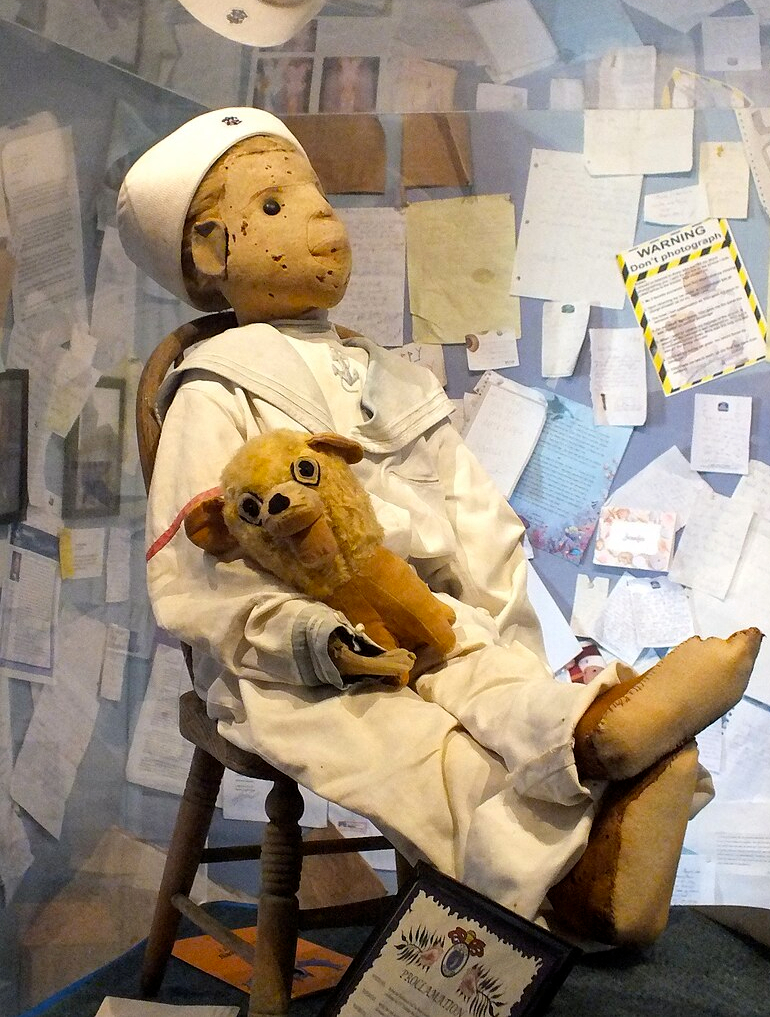
In the quaint streets of Key West, Florida, there lies a tale that has intrigued and spooked generations—the story of Robert the Doll. This eerie narrative transports us to the early 1900s when a young boy named Gene Otto received a one-of-a-kind handmade doll from a servant in his parents’ home. Little did anyone know that this innocent-looking doll would become the centre of mysterious and terrifying events that would span decades.
Gene, affectionately called “Eugene” by his family, immediately bonded with the doll and named it Robert. Robert is believed to be manufactured by Steiff Company of Germany. The doll, dressed in a sailor’s suit reminiscent of Gene’s childhood attire, quickly became his constant companion. However, what began as a simple childhood friendship soon took a sinister turn.
The Artist’s House at 534 Eaton Street in Key West was where this haunting saga unfolded. Built between 1890 and 1898, this historic home became the backdrop for Robert’s eerie escapades. One fateful night, young Gene awoke to find Robert sitting at the end of his bed, staring at him with unblinking eyes. The events that followed—a tumultuous upheaval in Gene’s bedroom, accompanied by his desperate cries for help marked the beginning of Robert’s unsettling presence in the Otto household.
Gene’s parents, disturbed by their son’s claims of the doll’s mischief, witnessed inexplicable occurrences themselves. From hearing Gene converse with the doll in different voices to witnessing Robert’s expression change and even giggling and running about the house, Robert seemed to possess a life of its own. As Gene grew older, Robert remained a constant in his life, even after his marriage to Anne.
Anne, however, harboured a deep unease about Robert. She sensed an ominous aura surrounding the doll and urged Gene to confine it to the attic, away from their daily lives. Despite Gene’s initial reluctance, he eventually complied, believing it to be in the best interest of their household.
Yet, Robert’s influence did not wane with confinement. Visitors to the Otto home reported eerie sounds emanating from the attic, footsteps, pacing, and sinister giggles that sent shivers down their spines. Neighbourhood children shared tales of Robert’s mocking presence, watching them from the upstairs window and playing unsettling pranks.
Gene’s passing in 1974 marked a new chapter in Robert’s haunting legacy. A new family, unaware of the doll’s sinister reputation, discovered Robert in the attic. Their daughter, initially delighted by the find, soon fell victim to Robert’s alleged malevolence. Nightmares, screams in the night, and claims of the doll moving on its own fueled the fear surrounding Robert.
Robert’s journey didn’t end there. Following a series of events, the doll found its way to the East Martello Fort, where it resides to this day. Visitors from around the world flock to witness the most haunted doll, housed in a glass case that fails to contain its eerie presence.
The mystery deepens with speculations about the doll’s origins. Some believe that a vengeful servant, mistreated by the Otto family, cursed the doll with Voodoo and Black Magic, imbuing it with supernatural powers. Others attribute Robert’s haunting nature to the deep bond between Gene and the doll, a bond that transcended death.
Reports of Robert causing car accidents, broken bones, job loss, and even divorce fuel the legend of its malevolence. Cameras malfunction in its presence, as if the doll refuses to be captured without consequence. Museum staff recount chilling experiences—facial expressions changing, demonic giggles echoing through the halls, and Robert seemingly reaching out from its glass prison.
The doll’s eerie ability to be aware of its surroundings, change expressions, and cause disruptions has cemented its status as a paranormal phenomenon. Notes left by visitors, seeking Robert’s permission to photograph it, attest to the lingering fear and respect for its alleged powers.
The tale of Robert the Doll serves as a cautionary reminder of the mysteries that lurk in the shadows. It challenges our understanding of the supernatural and blurs the line between reality and myth. Whether Robert is truly possessed or a product of collective belief, one thing remains certain—its story continues to intrigue, frighten, and captivate all who dare to delve into the haunted history of Key West’s most infamous doll.

 Uncanny Lounge