
Long barrows, mysterious earthen mounds scattered across the landscapes of Europe, have intrigued archaeologists, historians, and folklore enthusiasts for centuries. These ancient burial sites, date back to the Neolithic period and hold within them not just the remains of our ancestors but also a wealth of myths and legends. Let’s embark on a journey to explore the history and myth of long barrows, delving into the fascinating stories they conceal and the scientific discoveries that continue to unravel their secrets.
The Origins of Long Barrows
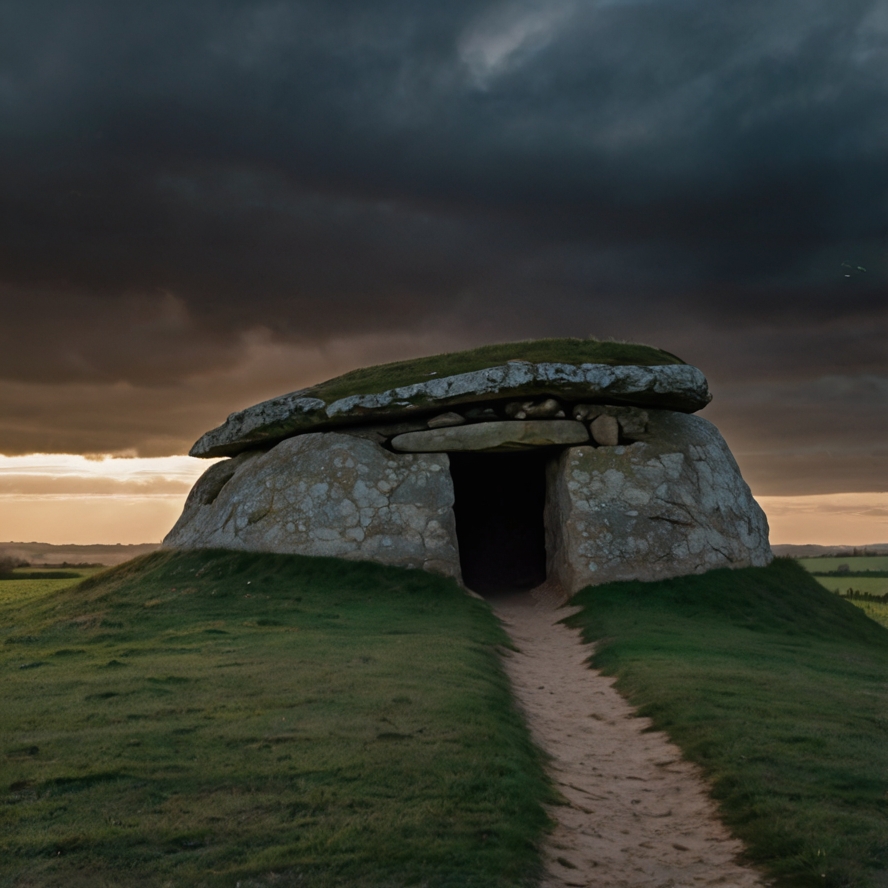
Long barrows are elongated mounds of earth and stone, typically measuring up to 100 meters in length, built primarily during the Early Neolithic period, around 4000-3000 BCE. They are among the earliest examples of monumental architecture in prehistoric Europe, predating the more famous stone circles and megalithic structures like Stonehenge.
These burial mounds were constructed by communities transitioning from a nomadic lifestyle to settled farming. The shift in lifestyle necessitated a new way of honoring the dead, showing the importance of ancestry and territorial claims. Long barrows served as communal burial sites, often housing multiple individuals over several generations. This practice shows a deep-seated reverence for ancestors and a belief in the continuity between the living and the dead.
The Construction of Long Barrows
The construction of long barrows was a complex and labor-intensive process, reflecting the communal effort and sophisticated organizational skills of Neolithic societies. Typically, they began with a wooden structure or stone chambers at the core, where the bodies were placed. These chambers were then covered with earth, forming the elongated mound that we see today..
Some long barrows feature intricate internal structures, such as passageways and chambers, designed to house the remains and possibly facilitate rituals. These internal features vary widely, indicating regional differences in burial practices and beliefs. For instance, the long barrows of the Cotswold-Severn region in England often have elaborate stone chambers, while those in other areas might consist of simpler wooden constructions. Investigation seems to show that the materials for the structure may be based on the materials at hand
The Purpose and Significance
The primary purpose of long barrows was to serve as burial sites, but their significance extends far beyond mere interment. They were focal points for Neolithic communities, serving as places of ritual and remembrance. The communal effort required to build these structures suggests they were central to social cohesion and identity.
Long barrows also symbolized territorial claims. By erecting these monuments, communities could assert their presence and control over a given area. This aspect of long barrows is particularly evident in their placement within the landscape; many are situated on prominent ridges or hills, making them visible from great distances.

Midnightblueowl at English Wikipedia, CC BY-SA 4.0 https://creativecommons.org/licenses/by-sa/4.0, via Wikimedia Commons
Myths and Legends
As with many ancient structures, long barrows have given rise to a plethora of myths and legends, intertwining historical fact with storytelling. These tales often reflect the deep sense of mystery and awe that these ancient monuments inspire.
Guardian Spirits and Ancient Kings
One common legend associated with long barrows is that of guardian spirits or ancient kings. In many cultures, it is believed that the spirits of those buried within the barrows continue to watch over the land. For instance, the Belas Knap long barrow in Gloucestershire, England, is said to be guarded by the spirit of an ancient chieftain who protects the surrounding area from harm.
In some legends, long barrows are considered the resting places of great kings or warriors. The connection to royalty and heroism gives these sites a sense of grandeur and historical significance, linking the present to a mythylogical past.
The Fairy Mounds
In Irish folklore, long barrows are often associated with the Otherworld and fairy folk. Known as sidhe mounds, these structures are believed to be entrances to the realm of the fairies. According to legend, disturbing a sidhe mound can bring misfortune, as it angers the fairy inhabitants.
These myths have contributed to the preservation of long barrows, as local populations have historically avoided disturbing them out of respect or fear of supernatural retribution. The connection to the fairy world underscores the mystical aura that surrounds these ancient structures.
The Wailing Ghosts
Another prevalent myth is that of wailing ghosts haunting the long barrows. These spectral figures are said to be the restless spirits of those buried within the mounds. Visitors have reported hearing eerie sounds, such as mournful cries or whispers, emanating from the barrows, especially during twilight or on misty nights.
These ghost stories add a layer of supernatural intrigue to long barrows, making them popular sites for paranormal investigations and local folklore. The tales of wailing ghosts reflect the ancient belief in the continued presence of the dead and the thin veil separating the living from the spiritual realm.

Archaeological Discoveries
Modern archaeology has provided valuable insights into the construction, use, and cultural significance of long barrows. Excavations have revealed a wealth of artifacts, including pottery, tools, and skeletal remains, offering a glimpse into the lives of Neolithic communities.
Skeletal Remains
One of the most significant discoveries in long barrows is the skeletal remains of the individuals buried within. Analysis of these remains has provided important information about the health, diet, and lifestyle of Neolithic people. For instance, the bones often show signs of a predominantly agricultural diet, with evidence of physical labor.
Moreover, the study of burial practices, such as the arrangement of bodies and grave goods, has shed light on the social and ritualistic aspects of these communities. Some long barrows contain carefully arranged skeletons, suggesting ritualistic practices and beliefs about the afterlife.
Artifacts and Grave Goods
Artifacts found within long barrows, such as pottery, tools, and ornaments, offer clues about the material culture and trade networks of Neolithic societies. These items were likely placed in the tombs as offerings to the dead, reflecting the belief in an afterlife where such goods would be needed.
The presence of imported materials in some long barrows indicates that Neolithic communities were part of extensive trade networks. For example, certain types of flint tools found in British long barrows have been traced back to sources in mainland Europe, suggesting long-distance connections.
DNA and Isotope Analysis
Advancements in DNA and isotope analysis have revolutionized our understanding of the people buried in long barrows. Isotope analysis of teeth and bones can reveal information about diet and migration patterns, while DNA analysis can provide insights into familial relationships and genetic diversity.
Recent studies have shown that some long barrows contain individuals who were not closely related, indicating that these burial sites were used by broader communities rather than single families. This finding challenges earlier assumptions about the exclusivity of long barrow burials and highlights the communal nature of Neolithic societies.
The Modern Fascination
Today, long barrows continue to captivate the public, drawing visitors, researchers, and spiritual seekers. These ancient monuments are popular destinations for those interested in history, archaeology, and the supernatural. These structures can give us pause for thought on how we may have lived in the past and make us ponder our own modern beliefs.
Heritage and Preservation
Long barrows are protected heritage sites in many countries, with efforts focused on their preservation and study. Organizations such as Historic England and the National Trust play a crucial role in maintaining these sites and facilitating public access.
Educational programs and guided tours help to raise awareness about the historical and cultural significance of long barrows, ensuring that future generations can appreciate these ancient monuments.
Spiritual and New Age Interest
Long barrows also attract people with an interest in spirituality and New Age beliefs. Many people visit these sites for meditation, rituals, and ceremonies, drawn by the powerful sense of history and the connection to ancient traditions.
The fascination with long barrows harks to our universal desire to connect with the past. Much like standing stones and other historic structures they can still inspire us with links to our historical past. Whether for archaeology, folklore, or for spirituality we still hold an interest for these mysterious artifacts.

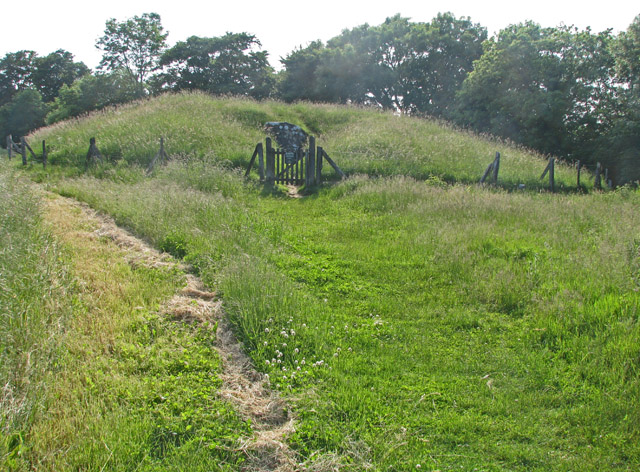
TJatHAURC, CC BY-SA 4.0 https://creativecommons.org/licenses/by-sa/4.0, via Wikimedia Commons
In closing
Long barrows are rich with history and mythological associations and are intriguing remains of our prehistoric past. These ancient burial mounds offer a window into the lives, beliefs, and practices of Neolithic communities, while also serving as focal points for folklore and legend and spiritual practices of today.
As we continue to study and preserve these structures we uncover new layers of understanding about our ancestors and their world. The long barrows stand as monuments to human ingenuity, communal effort, and the connection between the living and the dead. Whether as historical artifacts, sources of myth, or spiritual symbols, long barrows remain a testament to the enduring power of the past in shaping our present and future.

 Uncanny Lounge