Have you ever heard of a house so haunted that it inspired numerous books, movies, and endless debates? I know for myself this was one of the horror tales that struck me with terror as a young horror fiend, for such terrifying events to happen in your house was enough to have me in a panic. So, welcome to the Amityville Horror—a story that blurs the lines between fact and fiction, renewing the horror for enthusiasts for decades. But what really happened in that eerie house on 112 Ocean Avenue? Let’s unravel the mystery, delve into its history, explore the controversy, and examine the books and movies that have immortalized this chilling tale.
The History of 112 Ocean Avenue

The DeFeo Family Tragedy
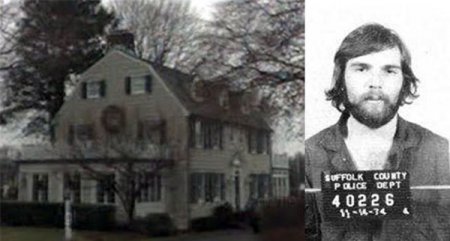
Our journey begins with a tragedy that forever altered the quiet community of Amityville, New York. On the night of November 13, 1974, the serene suburban life was shattered by an unimaginable horror. In the early hours, 23-year-old Ronald DeFeo Jr. took a .35 caliber rifle and systematically murdered his entire family: his parents, Ronald Sr. and Louise DeFeo, and his four siblings, Dawn, Allison, Marc, and John Matthew, as they slept in their beds. The brutal nature of the crime sent shockwaves through the community and beyond.
Ronald DeFeo Jr. was the eldest child of the DeFeo family, who resided at 112 Ocean Avenue. The DeFeos were a seemingly typical suburban family, but beneath the surface, tensions simmered. Ronald Jr., known as “Butch,” had a troubled relationship with his father and struggled with substance abuse and erratic behavior. Despite these issues, no one could have anticipated the horrific events that would unfold that night.
On the morning after the murders, DeFeo Jr. ran into a local bar, screaming for help and claiming his family had been shot. The police arrived at the DeFeo residence and discovered the gruesome scene. All six family members had been shot in their beds, with no signs of struggle. DeFeo Jr.’s initial story of the killings being the work of a mob hitman quickly unraveled under police scrutiny. He eventually confessed to the murders, claiming that voices in the house compelled him to commit the heinous act.
During his trial, DeFeo Jr.’s defense attorney attempted to plead insanity, arguing that his client heard voices that drove him to kill. However, the jury found him guilty of six counts of second-degree murder, and he was sentenced to six consecutive life sentences. The case, marked by its brutality and the perplexing claims of supernatural influence, captivated the public’s imagination and laid the groundwork for what would later become the legend of the Amityville Horror.
The Lutz Family Move In
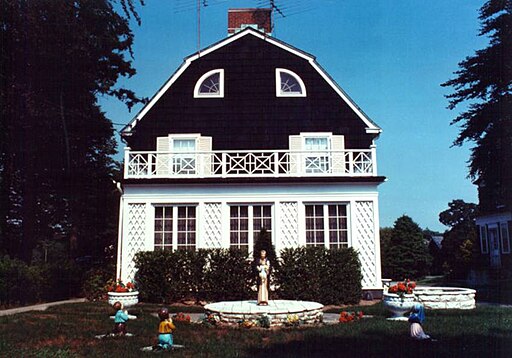
A little over a year after the horrific DeFeo murders, the house at 112 Ocean Avenue found new occupants. In December 1975, George and Kathy Lutz, along with their three children, purchased the house at a significantly reduced price, drawn by the opportunity to own a beautiful, spacious home in a quiet neighborhood. The Lutz family saw this as the perfect place to start a fresh chapter in their lives. However, they were unaware of the chilling events that had transpired within its walls and the dark presence they would soon encounter.
From the moment they moved in, the Lutz family began experiencing a series of inexplicable and terrifying events. Initially, these incidents were subtle: strange noises, an unshakable sense of unease, and cold spots that defied logical explanation. As time passed, the disturbances grew more intense and bizarre. George, a pragmatic and skeptical man, found himself waking up at exactly 3:15 a.m. each night, the same time the DeFeo murders were believed to have occurred.
Kathy and the children were not spared from the house’s malevolent influence. Kathy reported vivid and horrifying nightmares about the murders, while the children experienced unexplained phenomena in their rooms. One of the most disturbing manifestations was the green, gelatinous slime that oozed from the walls and keyholes, defying any rational explanation. Strange odors permeated the house, and a mysterious room, dubbed “the Red Room,” was discovered in the basement, a place their dog refused to enter.
As the days went on, the family’s experiences escalated to the point where their safety seemed in jeopardy. They witnessed levitating objects, doors slamming shut on their own, and ghostly apparitions. The final straw came when Kathy reportedly levitated off her bed, and George saw the shape of a demonic pig with glowing red eyes through the windows.
Terrified and desperate, the Lutzes fled the house after just 28 days, leaving all their belongings behind. They sought refuge with friends and family, never returning to 112 Ocean Avenue. Their accounts of the haunting were so harrowing that they captured the public’s imagination, eventually becoming the foundation for the legend of the Amityville Horror
The Controversy Begins
Skepticism and Investigation
The Lutz family’s harrowing account of their brief stay at 112 Ocean Avenue quickly captured the media’s attention, turning their story into a nationwide sensation. However, not everyone was convinced by their chilling tales of paranormal activity. Skeptics and investigators began to scrutinize the family’s claims, pointing to inconsistencies and potential motives for fabricating their experiences.
Critics noted several discrepancies in the Lutzes’ accounts, suggesting that their story changed over time. For instance, some of the most dramatic elements of their haunting, like the green slime and demonic pig with glowing eyes, were not consistently reported. These inconsistencies fueled suspicion that the Lutzes might have exaggerated or even invented their experiences to attract media attention and financial gain.
Despite the skepticism, notable paranormal investigators took an interest in the case. Among them were Ed and Lorraine Warren, a renowned husband-and-wife team who specialized in investigating supernatural phenomena. The Warrens visited the Amityville house and declared it genuinely haunted, citing photographic evidence of ghostly apparitions and other unexplained occurrences. Their endorsement lent some credibility to the Lutzes’ claims, reinforcing the narrative of a haunted house.
However, critics remained unconvinced. They argued that the Lutzes’ story was a hoax, orchestrated to profit from the media frenzy surrounding the DeFeo murders. Some skeptics suggested that the Lutzes collaborated with Ronald DeFeo Jr.’s defense attorney, William Weber, to fabricate the haunting and secure lucrative book and movie deals.
The controversy surrounding the Lutzes’ account highlighted the complexities of distinguishing fact from fiction in paranormal investigations. While believers saw the Amityville Horror as a compelling case of supernatural activity, skeptics viewed it as a cautionary tale of how easily truth can be manipulated for personal gain.
Legal Battles and Confessions
The Amityville Horror’s credibility was severely challenged when legal entanglements and shocking confessions came to light. William Weber, Ronald DeFeo Jr.’s defense attorney, later admitted that he and the Lutzes had fabricated the haunted house story to profit from the notoriety of the DeFeo murders. According to Weber, he and the Lutz family sat around, brainstorming sensational elements to incorporate into the narrative, with hopes of securing a lucrative book deal and potential movie rights.
This revelation cast a significant shadow over the entire saga. Skeptics seized on Weber’s confession to argue that the haunting was nothing more than a carefully orchestrated hoax designed to capitalize on public fascination with the paranormal. The Lutz family, however, stood by their story, maintaining that their experiences in the house were genuine.
The admission of this collaboration between Weber and the Lutzes raised serious questions about the motives behind the haunting claims. It suggested that financial gain, rather than actual paranormal events, might have driven the creation of the Amityville Horror legend. This blend of legal maneuvering and confession significantly complicated the narrative, leaving it shrouded in ambiguity and controversy.
The Books: Separating Fact from Fiction
“The Amityville Horror” by Jay Anson
In 1977, Jay Anson’s book, “The Amityville Horror,” hit the shelves. The book, based on tapes recorded by George and Kathy Lutz, depicted their horrifying experiences in the house. It quickly became a bestseller, cementing the Amityville Horror’s place in pop culture. But was it a true account, or merely a sensationalized story?
Subsequent Books and Rebuttals
Following Anson’s book, numerous other works emerged, each offering different perspectives on the haunting. Some authors supported the Lutz family’s story, while others debunked it as a hoax. Notable among these is “The Amityville Horror Conspiracy” by Stephen Kaplan, a paranormal investigator who exposed inconsistencies in the Lutzes’ narrative.
The Movies: Hollywood’s Take on the Amityville Horror
The Original Film (1979)
Hollywood wasted no time in adapting the story for the big screen. In 1979, “The Amityville Horror” movie was released, directed by Stuart Rosenberg. Starring James Brolin and Margot Kidder, the film dramatized the Lutz family’s ordeal, amplifying the horror elements for cinematic effect. The movie was a commercial success, but it also faced criticism for its factual inaccuracies.
Sequels and Remakes
The success of the original film spawned a franchise, with numerous sequels, prequels, and remakes exploring different aspects of the Amityville legend. Each movie added its own twists and turns, further blurring the line between reality and fiction. Notable entries include “Amityville II: The Possession” (1982), “Amityville 3-D” (1983), and the 2005 remake of the original film.
There is quite a list of movies inspired by the phenomenon that that is the Amityville house:
· The Amityville Horror (1979) – Directed by Stuart Rosenberg, this is the original film adaptation of the Lutz family’s experiences, starring James Brolin and Margot Kidder.
· Amityville II: The Possession (1982) – Directed by Damiano Damiani, this prequel explores the events leading up to the DeFeo family murders, starring Burt Young and James Olson.
· Amityville 3-D (1983) – Directed by Richard Fleischer, this film is a sequel to the original, presented in 3D, and features Tony Roberts and Tess Harper.
· The Amityville Curse (1990) – Directed by John Hancock, this direct-to-video film is based on the novel of the same name by Hans Holzer, focusing on a different set of characters and events.
· The Amityville Horror (2005) – A remake of the 1979 film, directed by Andrew Douglas, starring Ryan Reynolds and Melissa George. This version updates the story for a new generation.
· The Amityville Haunting (2011) – Directed by Geoff Meed, this found-footage style film is a reimagining of the haunting, with a focus on a new family experiencing supernatural events in the house.
· The Amityville Asylum (2013) – Directed by Andrew Jones, this film presents a new story involving a haunted asylum connected to the Amityville house.
· Amityville: The Awakening (2017) – Directed by Franck Khalfoun, this film is a modern take on the Amityville Horror, starring Bella Thorne and Jennifer Jason Leigh. It follows a family that moves into the infamous house and experiences disturbing phenomena.
· The Amityville Murders (2018) – Directed by Daniel Farrands, this film focuses on the DeFeo family murders, providing a dramatized retelling of the events leading up to the tragedy.
The Impact on Horror Cinema
The Amityville Horror franchise left an indelible mark on horror cinema. It influenced countless other haunted house stories, setting a precedent for blending real-life events with supernatural elements. The films continue to attract viewers, keeping the legend alive and fueling debates about the true nature of the haunting. If you check the current list of films on the IMDB site there are a staggering 28 movies aligned somehow with the Amityville incidents.
Unresolved Questions and Ongoing Fascination
The House Today
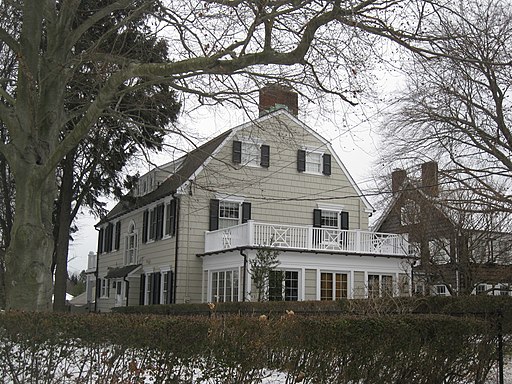
The infamous house at 112 Ocean Avenue still stands, albeit with a new address to deter curious onlookers. Over the years, subsequent owners have reported no paranormal activity, adding another layer of mystery to the story. Is the house truly haunted, or was it all a cleverly crafted hoax?
The Amityville Horror continues its fascination for us because it taps into our deepest fears—the unknown, the supernatural, and the possibility that evil can lurk within the familiar confines of a suburban home. Whether you believe the haunting was real or fabricated, the story continues to terrify.
In closing
The Amityville Horror is more than just a ghost story; it’s a cultural phenomenon. Its history is steeped in tragedy, its controversy is fueled by conflicting accounts, and its legacy is cemented by books and movies that keep the tale alive. As we peel back the layers of this chilling narrative, one thing becomes clear: the Amityville Horror will forever remain an mystery, compelling us to question what we believe about the paranormal and the power of a good scare or in the power of a hoax to perpetuate myths.
So, the next time you hear a bump in the night, remember the Lutz family’s tale. Whether you think it’s a true account of a haunted house or a masterful hoax, one thing is certain—the Amityville Horror has left its mark on the world of the supernatural. Will we ever know the full truth? Perhaps not. But as long as there are those who love a good scare, the legend of 112 Ocean Avenue will live on.
And there you have it—the complete story of the Amityville Horror. A blend of history, controversy, books, and movies that continues to intrigue and terrify. Whether you’re a believer or a skeptic, the Amityville Horror invites you to explore the thin veil between reality and the supernatural.
Will you dare to delve deeper into its mysteries? The choice is yours. If you enjoyed this deep dive into the Amityville Horror, don’t forget to check out our other posts exploring the most haunted locations and supernatural tales from around the world. Share your thoughts in the comments below!
Want to learn about more spooky locations? Click the link 10 Cursed locations

 Uncanny Lounge