
Have you ever wondered if certain places hold a dark, inescapable energy? Does walking by that derelict local house filled you with dread and horror? The idea that locations can be cursed is a long held theme in folklore, urban legends, and popular culture.
In this post we will delve deep into the concept of cursed locations, exploring how urban legends and myth-making shape our understanding and can perpetuate these eerie tales. To get a greater understanding we’ll look at how to analyze cursed legends and how to equate the use of fact and fiction when we look at cursed locations. Whether we want to look at these locations as true artifacts of a mysterious world or as a puzzle to debunk, they can still roam around our brains and make us think about what is real and what is unreal.
What Are Cursed Locations?
First, let’s define what we mean by a “cursed location.” Typically, these are places believed to harbor negative energies, bad luck, or supernatural phenomena. These locations often have stories of tragedy, unexplained occurrences, or a history that lends itself to eerie interpretations. Famous examples include the Bermuda Triangle, the Winchester Mystery House, Egyptian tombs and the ancient city of Pompeii.
The Role of Urban Legends
Urban legends play a significant role in perpetuating the idea of cursed locations. These stories, often passed down through generations, blend fact and fiction, creating a compelling narratives that act as lessons for the wary and entertainment for those who crave weird tales.

Case Study 1: The Bermuda Triangle
One of the most infamous “cursed” locations is the Bermuda Triangle, a region in the North Atlantic Ocean bounded by Miami, Bermuda, and Puerto Rico. The legend claims that numerous ships and aircraft have mysteriously disappeared in this area under unexplained circumstances. This mysterious region, also known as the Devil’s Triangle, has been a focal point of fascination for decades.
Myth-Making and Its Influence
Myth-making involves creating stories that convey cultural, moral, or philosophical truths, often using symbolism and allegory. In the context of cursed locations, myth-making helps embed these tales into the collective consciousness.

Case study 2: The Curse of King Tut’s Tomb
The discovery of King Tutankhamun’s tomb in 1922 by archaeologist Howard Carter and his team was a monumental moment in the field of Egyptology. However, it also led to the spread of the “Curse of the Pharaohs,” a legend that purportedly afflicted those who entered the tomb with misfortune, illness, and death. This curse narrative was sparked by the sudden and mysterious deaths of several individuals connected to the excavation, most notably Lord Carnarvon, the financial backer of the expedition, who died shortly after the tomb’s opening.
Analyzing Cursed Locations
Understanding
We need to interpret the significance of these stories. Why do they persist? What do they say about human nature and our need for explanation?
Psychological Comfort
Cursed location legends often provide a form of psychological comfort. They offer a narrative that makes sense of random or tragic events, giving people a framework to understand the inexplicable.
Applying
Applying this understanding, we see how these legends influence behavior and culture. People avoid these locations, or conversely, visit them out of curiosity. They impact tourism, real estate, and even local economies.
Impact on Tourism
Locations like the Egyptian tombs draw thousands of visitors each year, driven by the history and mystery of the location. Adding in popular culture perpetuating the myths through movies such as Indiana Jones and The Exorcist. This demonstrates how urban legends and myth-making can turn a place into a cultural landmark.
Analyzing
Analyzing these legends involves dissecting the elements that make them compelling and enduring. What are the common themes? How do they evolve over time?
Common Themes
- Tragedy: Most cursed locations have a history of tragedy, whether it’s a natural disaster, a murder, or a mysterious disappearance.
- Unexplained Phenomena: Stories often include elements that defy rational explanation, such as ghost sightings or strange occurrences.
- Symbolism: Many cursed locations carry symbolic weight, representing broader fears and anxieties. Death, disappearances and acts beyond our control
Evaluating
Evaluating the validity of cursed location stories requires critical thinking. We must weigh the evidence, consider alternative explanations, and recognize the role of confirmation bias.
Critical Evaluation
- Scientific Explanations: Many phenomena attributed to curses have rational explanations. For example, the Bermuda Triangle’s disappearances can often be explained by natural hazards and human error.
- Psychological Factors: The power of suggestion and expectation can lead people to experience or interpret events in line with the curse narrative.
Creating
Finally, we synthesize this information to create a broader understanding of the cultural and psychological functions of cursed locations. How can we use this knowledge to better understand human behavior and the power of storytelling?
Synthesis
Cursed locations, urban legends, and myth-making all tap into a fundamental aspect of human nature: the need for stories. These narratives help us make sense of the world, cope with uncertainty, and connect with others through shared cultural touchstones.
The Interplay of Fact and Fiction
One of the most intriguing aspects of cursed location legends is how they blend fact and fiction. Real events become exaggerated or distorted, creating a narrative that is both believable and fantastical.
King Tut’s tomb
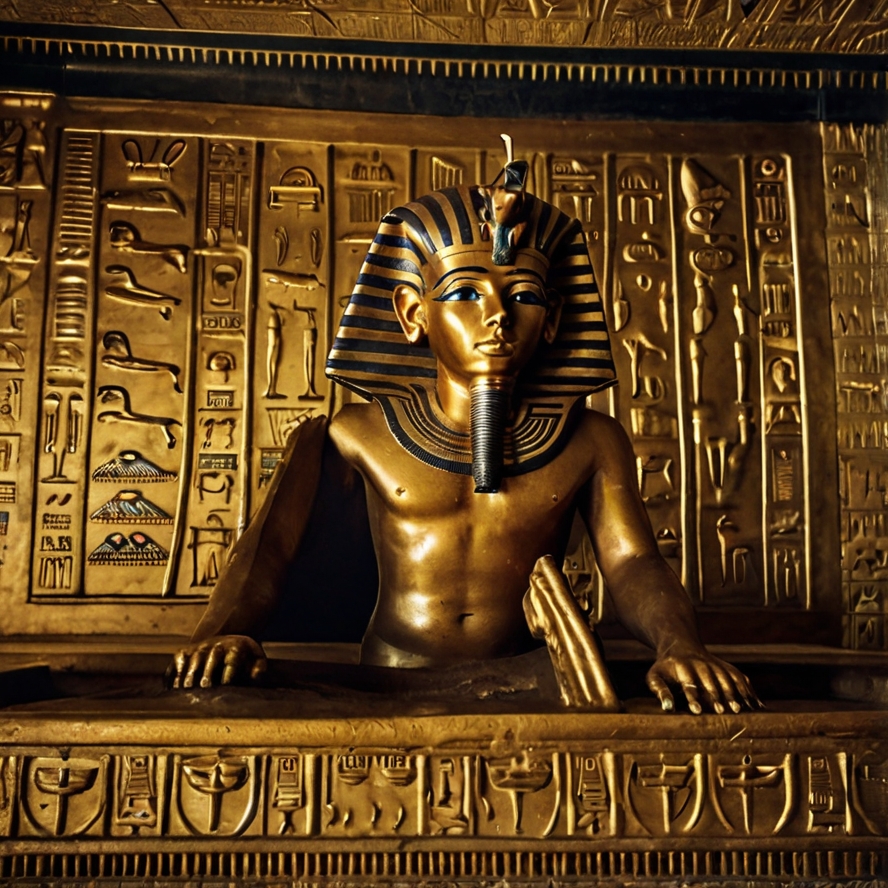
The curse of King Tutankhamun’s tomb is a prime example of the intricate interplay between fact and fiction in the realm of historical myths. When Howard Carter discovered the tomb of the young pharaoh in 1922, it was a groundbreaking archaeological find. However, this momentous discovery quickly became overshadowed by tales of a deadly curse said to afflict anyone who disturbed the resting place of the ancient king.
The myth of the curse gained traction when Lord Carnarvon succumbed to an infected mosquito bite in April 1923, just months after the tomb was uncovered. Sensationalist media reports fueled public fascination, linking his death and those of others associated with the tomb to a supposed ancient curse. This idea was further perpetuated by a series of unfortunate events and untimely deaths among the expedition’s members and their associates, leading to a belief that the pharaoh’s wrath extended beyond the grave. This narrative was appealing and captivating, playing into the public’s fascination with the supernatural and the mysterious world of ancient Egypt.
Despite these eerie coincidences, rational explanations for the deaths and illnesses were provided by medical professionals and historians. For instance, Lord Carnarvon’s death was attributed to blood poisoning from the infected bite, exacerbated by his weakened health. Additionally, many of the other deaths occurred years later and could be attributed to natural causes rather than supernatural forces. However, the stories of the curse persisted, capturing the keeping the legends alive.
The “Curse of the Pharaohs” has become deeply ingrained in popular culture, inspiring countless books, movies, and documentaries. This enduring legend highlights the human tendency to seek supernatural explanations for unexpected events and our fascination with ancient mysteries.
In reality, no curse was found inscribed in the tomb. The deaths of individuals associated with the excavation can largely be explained by natural causes and the hazards of the time. With the example of Lord Carnarvon’s death due to an infection, and many other reported deaths occurred years later due to unrelated illnesses or accidents. Additionally, studies have shown that the majority of the people present at the tomb’s opening lived long, healthy lives, including Howard Carter himself, who died over a decade later.
Despite these facts, the the curse persisted, bolstered by media reports, books, and films that blurred the line between fact and fiction. The story of the curse capitalized on the mystique of ancient Egypt and the human tendency to fear the unknown. The interplay of fact and fiction in the case of King Tutankhamun’s curse shows us how historical events can be transformed into compelling legends. It underscores the role of media in shaping public perception and the power of myths to move through generations, blending historical truth with storytelling

The Bermuda triangle
The Bermuda Triangle, an area in the North Atlantic Ocean bounded by Miami, Bermuda, and Puerto Rico, is one of the most long lasting and mysterious legends in modern folklore. This region has been the focus of numerous stories about ships and aircraft disappearing under inexplicable circumstances, leading many to believe it is cursed or influenced by supernatural forces. The interplay of fact and fiction in the Bermuda Triangle legend is a fascinating study in how myths are created and sustained.
The origins of the Bermuda Triangle legend can be traced back to the mid-20th century. In 1945, five U.S. Navy bombers known as Flight 19 vanished during a training mission over the area. When a rescue plane sent to find them also disappeared, the story of the Bermuda Triangle began to take shape. Over the years, reports of unexplained disappearances and strange occurrences continued to emerge, further cementing the region’s reputation as a cursed location.
Despite the compelling stories, scientific explanations for these phenomena abound. Methane hydrates on the ocean floor can release large bubbles of gas, potentially causing ships to lose buoyancy and sink rapidly. Additionally, the region is known for its magnetic anomalies, which can interfere with navigational instruments, leading to confusion and accidents. The area’s unpredictable weather, with sudden storms and strong currents, also contributes to the peril faced by vessels and aircraft.
The legend of the Bermuda Triangle gained widespread attention in the mid-20th century, particularly after the disappearance of Flight 19, a group of five U.S. Navy bombers on a training mission in 1945. When a rescue plane sent to find them also vanished, the story of the Bermuda Triangle took on a life of its own. This incident, among others, was sensationalized by the media and authors such as Charles Berlitz, whose 1974 book “The Bermuda Triangle” became a bestseller, further entrenching the myth in popular culture.
Despite the scientific explanations, the hold of the Bermuda Triangle persists in our imaginations. The blend of fact and fiction has created a story that taps into our fascination with the unknown and the mysterious. The media perpetuates the myth, with countless books, movies, and documentaries exploring the Bermuda Triangle’s supposed mysteries.
However, these scientific explanations have done little to quell the myth of the Bermuda Triangle. The legend persists, fueled by countless books, movies, and documentaries that sensationalize the mystery. Authors like Charles Berlitz and Vincent Gaddis have written extensively on the subject, while films and television shows have dramatized the disappearances, embedding the myth deeper into popular culture.
This interplay of fact and fiction highlights how easily historical events can be transformed into legends. It shows the human tendency to seek out supernatural explanations for unexplained phenomena and our attraction to mystery and adventure.

Other examples:
The Winchester Mystery House
The Winchester Mystery House in San Jose, California, is a prime example. After the death of her husband and child, Sarah Winchester supposedly began construction on the house to appease spirits she believed were cursing her family. The house’s labyrinthine design, with staircases leading to nowhere and doors opening onto walls, reinforces the idea of a curse. While Sarah Winchester did indeed build the house, the motives and supernatural elements are largely products of myth-making.
The Lost Colony of Roanoke
The disappearance of the Roanoke Colony in the late 16th century is another story steeped in myth. The word “Croatoan” carved into a tree is the only clue left behind, leading to wild speculations about curses, supernatural forces, and alien abductions. Historical evidence suggests more mundane explanations, such as integration with local tribes or relocation, but the legend of the cursed colony persists.
Cultural and Psychological Implications
The Need for Narrative
Human beings are natural storytellers. We seek patterns and meaning in the world around us, and when faced with the unknown or the tragic, we create narratives to explain and cope.
The Power of Storytelling
Stories of cursed locations serve several psychological functions:
- Coping Mechanism: They help people deal with tragedy and loss by providing a narrative that offers explanation and closure.
- Cultural Identity: These stories often become part of a community’s cultural identity, reinforcing shared beliefs and values.
- Social Cohesion: Sharing these stories can strengthen social bonds by creating a common cultural experience.
Confirmation Bias
Confirmation bias plays a significant role in perpetuating cursed location myths. Once a location is labeled as cursed, people tend to interpret events and experiences in ways that confirm the curse.
Example: The Myrtles Plantation
The Myrtles Plantation in Louisiana is reputed to be one of America’s most haunted homes. Stories of ghosts and unexplained phenomena abound. Visitors who experience anything unusual, from a draft to a creaky floorboard, often attribute it to the plantation’s supposed curse, reinforcing the legend.
Evaluating Evidence
Scientific Investigation
Many supposed cursed locations have been the subject of scientific investigation. These studies often debunk supernatural claims, offering natural or psychological explanations instead.
Debunking Myths
- The Bermuda Triangle: Extensive research has shown that the number of disappearances in the Bermuda Triangle is not significantly higher than in any other heavily trafficked region of the world.
- King Tut’s Curse: Modern medical explanations suggest that mold spores and bacteria in the tomb could have caused the illnesses attributed to the curse.
Skepticism and Critical Thinking
Applying skepticism and critical thinking is crucial when evaluating stories of cursed locations. By questioning sources, seeking evidence, and considering alternative explanations, we can separate fact from fiction.
Critical Questions
- What is the source of the information? Is it reliable?
- Are there alternative explanations for the phenomena?
- How does the story align with what we know about psychology and natural science?

In closing:
The idea of cursed locations holds our imagination because it taps into deep-seated psychological and cultural needs. Urban legends and myth-making play crucial roles in shaping and perpetuating these stories, blending fact and fiction in ways that help us to make sense of our world and lend an air of mystery to our lives.
The Power of story
Cursed location myths help us make sense of the world. They provide explanations for the inexplicable, offer comfort in the face of tragedy, and create a sense of shared cultural identity.
The Role of Critical Thinking
While these stories are fascinating, it’s essential to approach them with a critical mind. By evaluating evidence, considering alternative explanations, and recognizing the role of confirmation bias, we can appreciate these tales for what they are: a blend of history, psychology, and imagination.
Final Thoughts
Whether or not you believe in curses, the stories of cursed locations bring more layers to the human experience and show the creativity of the human mind. They remind us of our capacity for storytelling, our desire to find meaning, and our fascination with the unknown.
So, the next time you hear a tale of a cursed place, take a moment to appreciate the layers of history, culture, and psychology that make these stories so compelling.
Do you believe in cursed locations? Or is it all just make believe?

 Uncanny Lounge
Leave a comment