I have got a soft spot for winter wonderland horror and adventures. From horror based to true life adventure, there seems to be a pull about the frozen wasteland that is disassociated enough from the rest of the world to make it an eerie and unsettling place without any ghouls or goblins. Maybe it is that you are so far from the rest of the world, immediate rescue is not an option and you have to rely on yourself. Or perhaps it is because the environment is so very unforgiving, it does not care you are there so it truly is you against the elements.
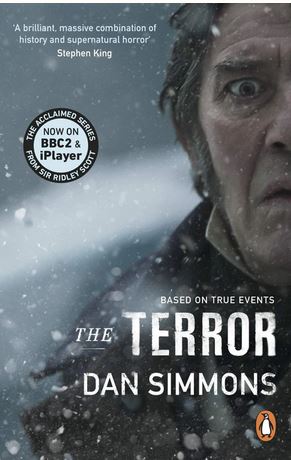
So this brings us to Dan Simmon’s ‘The Terror”
It is part historical adventure and part supernatural horror. For all that the book contains you could say that the supernatural horror angle was not really necessary as the rest of the book was horrific enough. Taking its stance on the disappearance of Sir John Franklin’s ill fated arctic expedition in 1845 to find the North West passage. Simmon’s imagining of the doomed expedition brings you deep into the freezing and unforgiving world of the frozen north, it feels as bleak as the poor souls in the story.
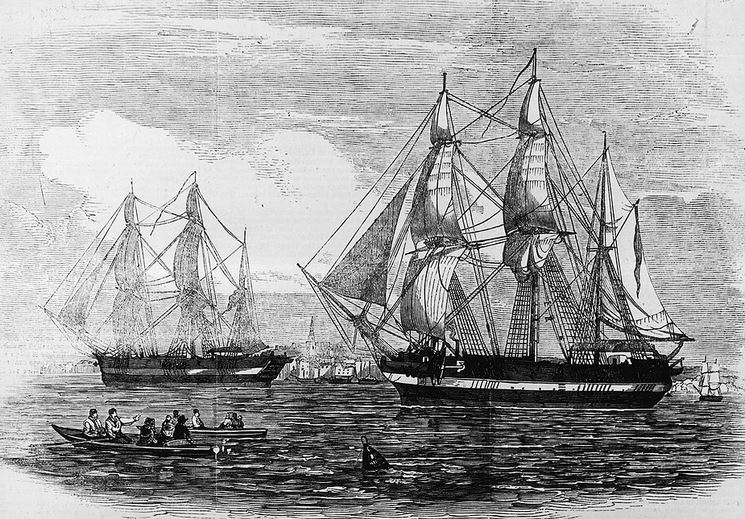
For a little history. Franklin’s British expedition set off in 1845 with two ships, the HMS Erebus and the HMS Terror in search navigating through the last unknown sections of the Northwest passage. The Northwest passage is a route that connects the Atlantic and Pacific oceans by heading through the Arctic and up over Canada and had been searched for since the 15th century. As can be imagined there’s a fair bit of moving ice to navigate. Seen to be the solution to quicker trade between the two oceans it is still a rarely used passage due to the conditions and heavy insurance costs. Back to history, the two ships became icebound for more than a year. After many crew had perished the rest set out overland (over ice) to try to head towards Canada. They were never found. All 129 that set out died. Searchers were sent out afterward in 1848 and many were sent after this. More chilling than the supernatural was the discovery of two bodies and the findings that the men would not have died quickly. Scientists also found cut marks on the bones which supported stories of cannibalism which was first brought up by one of the search teams in 1854. Subsequently the passage through was found with it first being navigated by boat by Roald Amunsden in 1906. It wasn’t until 2014 when the remains of the Erebus was found with the Terror being found in 2016.
Back to the book
Simmons follows much of the known history with the sailing of two Royal Navy ships, HMS Erebus and HMS Terror heading out to navigate the Northwest Passage. But when the ships become trapped in pack ice, their mission turns into a nightmare. Cut off from the world, they are befallen with starvation, disease, and the merciless cold. The crew soon spiralling into desperation as the days pass by.
Simmons stays true to the historical record on the expedition’s grim turn of events while also layering in a fictional terror: an unspeakable creature stalking the men across the ice. This creature, the Tuunabaq resembling giant a polar bear and created by Sedna the spirit of the sea and capable of moving between the physical and the spirit world devouring souls as it goes. Simmons probably basing the creature from Inuit mythology with the Tupilaq which is a spirit that resembles both man and beast. This supernatural antagonist starts following the men, it isn’t just a threat of real violence, it is an unkillable link to a world the men do not belong in.
Why This Book Works
At first glance, The Terror might read like a straightforward historic horror novel. But what makes it good is how it blends the genres of history and horror. But, as said before the book would have been just as good without a beast wandering the ice.
Immersive Historical Detail
This book is bleak, you can tell that the narrative is steeped in research, the claustrophobic feel of sailing vessels, the grueling routines of 19th-century naval life, and the fragility of human bodies in sub-zero conditions. You can almost feel the frostbite creeping in.
This level of detail also adds weight to every decision the characters make. When rations run low, or scurvy starts eating through a man’s body, the horror feels organic, not just made up for scares. It is not just cold, it is the waiting, no help is coming. This is quiet horror that keeps you in its grasp and won’t let you out.
Complex Characters Under Pressure
This is one of the aspects I enjoyed the most. There’s no one “hero” here. Instead, we get a rotating cast of officers and sailors, each with strengths, flaws, and secrets. Captain Crozier, the Terror’s Captain is noble but rigid. Dr. Goodsir, the ship’s surgeon, offers empathy but often struggles with his own beliefs. Each man becomes a lens on what endurance, faith, and fear do to someone pushed beyond human limits. We start to care about these people and as they drop feel a sense of loss. Simmons did a great job of playing with the class structure between the officers and the sailors in a very believable way that made you feel immersed in the times.
The Arctic as the Antagonist
Here the environment itself becomes a monster. Simmons paints the Arctic with such stark , bleak clarity that the terrain feels alive, indifferent and inscrutable to mere humans and monstrous in its icy beauty.
The environment doesn’t just challenge the characters physically; it dismantles them mentally. Ice, wind, and isolation become antagonists almost equal to the creature that stalks them. That’s where this novel shines, the terror isn’t just what lurks in shadows, but what the human mind conjures in response to isolation, fear, and hopelessness.
The Supernatural Threat
Rather than a conventional monster, the creature in The Terror is steeped in myth. It pays homage to indigenous knowledge rather than dismissing it.It allows some of the horror to remain ambiguous, is the creature real, or is it a manifestation of the crew’s collective unraveling? It adds some thematic depth in that the horror isn’t only external, but internal. The darkest monsters might be the ones inside our own minds. I’m still in two minds as sometimes the creature is not exactly a necessity for the narrative.
Some of the themes that will stick with you
Isolation and Madness
Cut off from civilization, the men confront not just physical peril but emotional and psychological erosion. The longer they stare into the white void, the more their thoughts fracture. Simmons does a fantastic job of portraying the deteriorating state of the crew, you feel it deeply.
Leadership and Morality
We see it with Captain Crozier trying to maintain order, but his leadership itself becomes a source of conflict with the men. When survival boils down to impossible choices, what does honor mean? It is that juxtaposition between the fight for survival and the normal rules that keep the peace when all is right.
The Limits of Knowledge
Despite the historic era’s confidence in exploration and science, the Arctic laughs in the face of certainty. This theme also holds true today, we may map the world, but we can never fully predict it.
Summing it up
If you favor fast-paced, jump-scare plots, you might find the pacing quite slow and deliberate But, this just adds to the narrative as the men are in a long wait so the slow tension mirrors their relentless grind of Arctic survival.
Give it a go if you like a slow burn with plenty of characters and an icy backdrop.This book won’t just chill your bones, it will unsettle your thoughts about fear, isolation, and what it means to confront the unknown.
Also out as an AMC two season series that came out in 2018. With the first season following the book outline and the second season a separate story line.
Not had enough of things happening in the cold, check out this post:

 Uncanny Lounge
Leave a comment